
2/ A Pilates Studio in the South of France: A Jacquemus-Inspired Concept
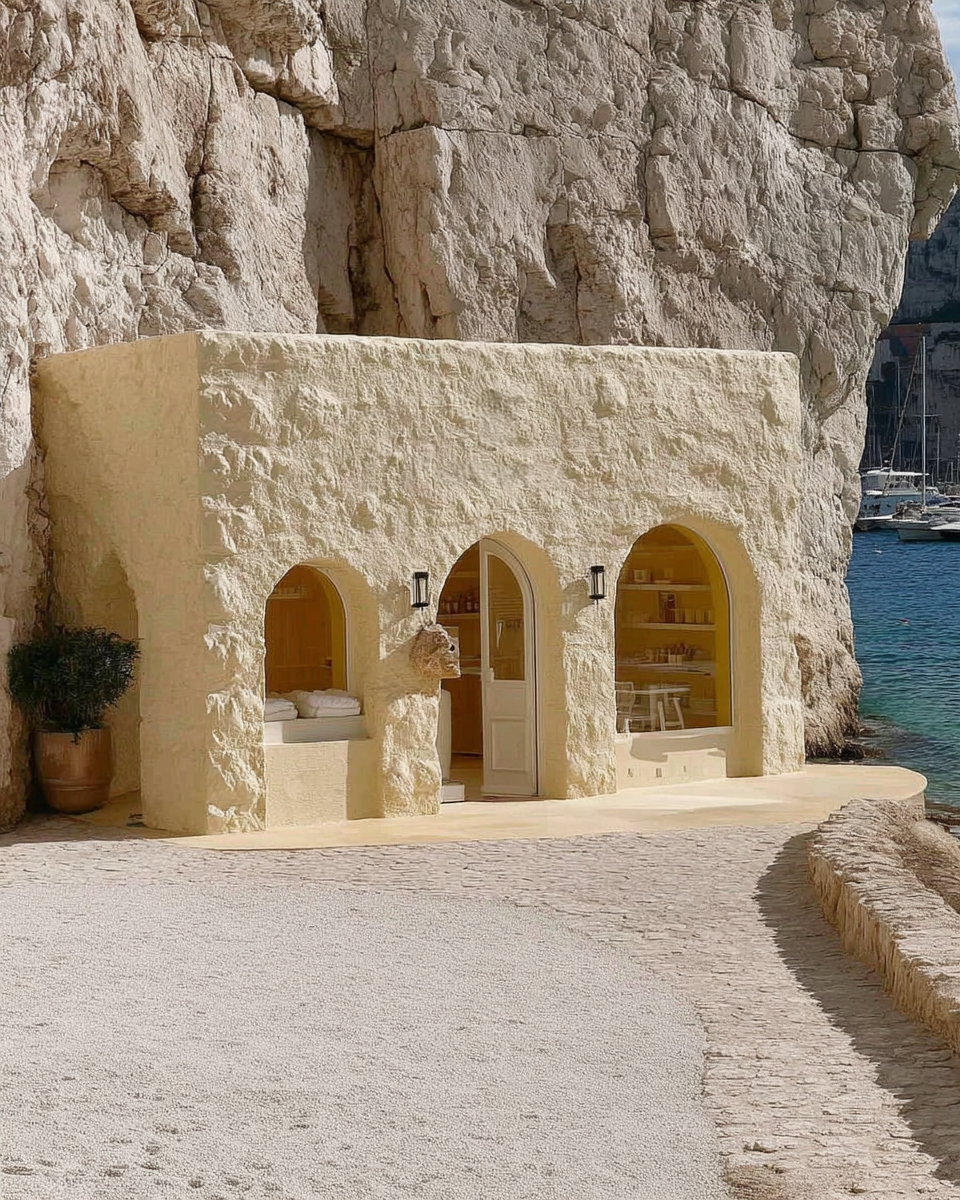
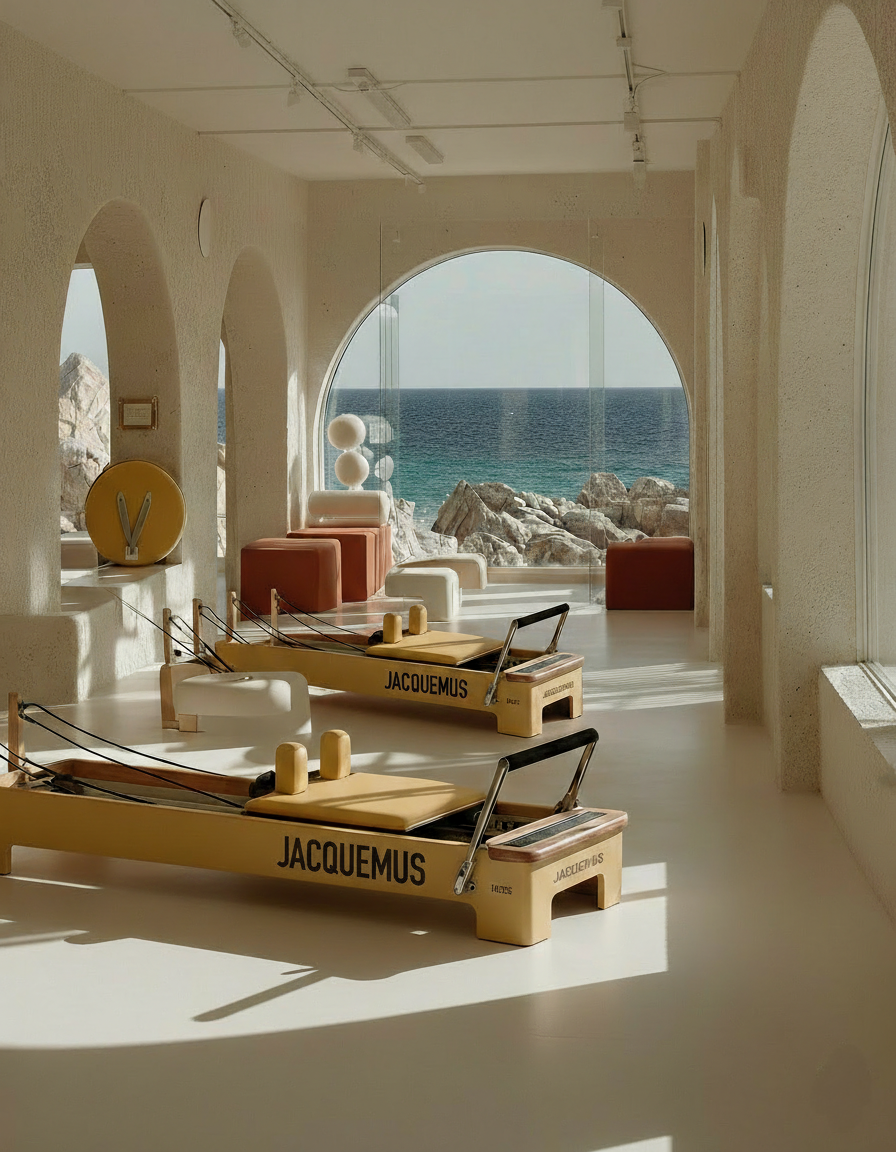

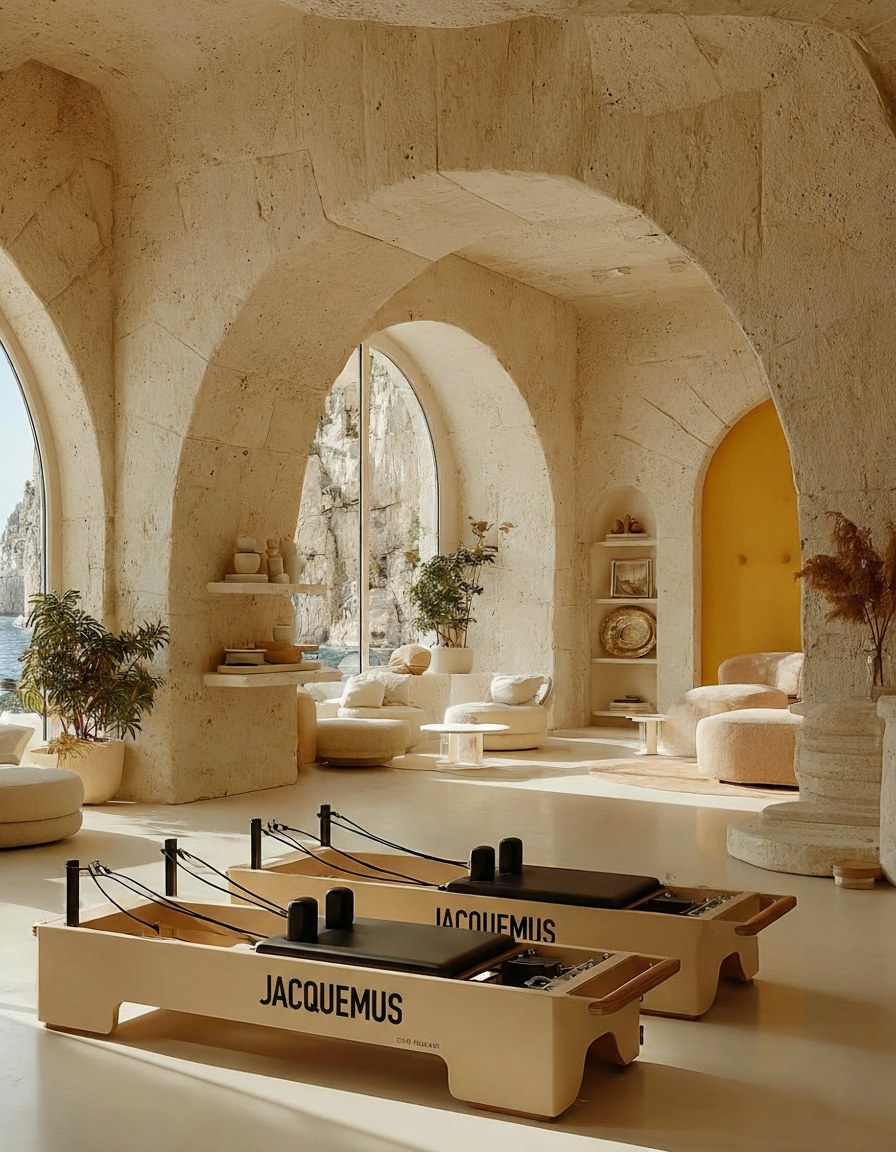

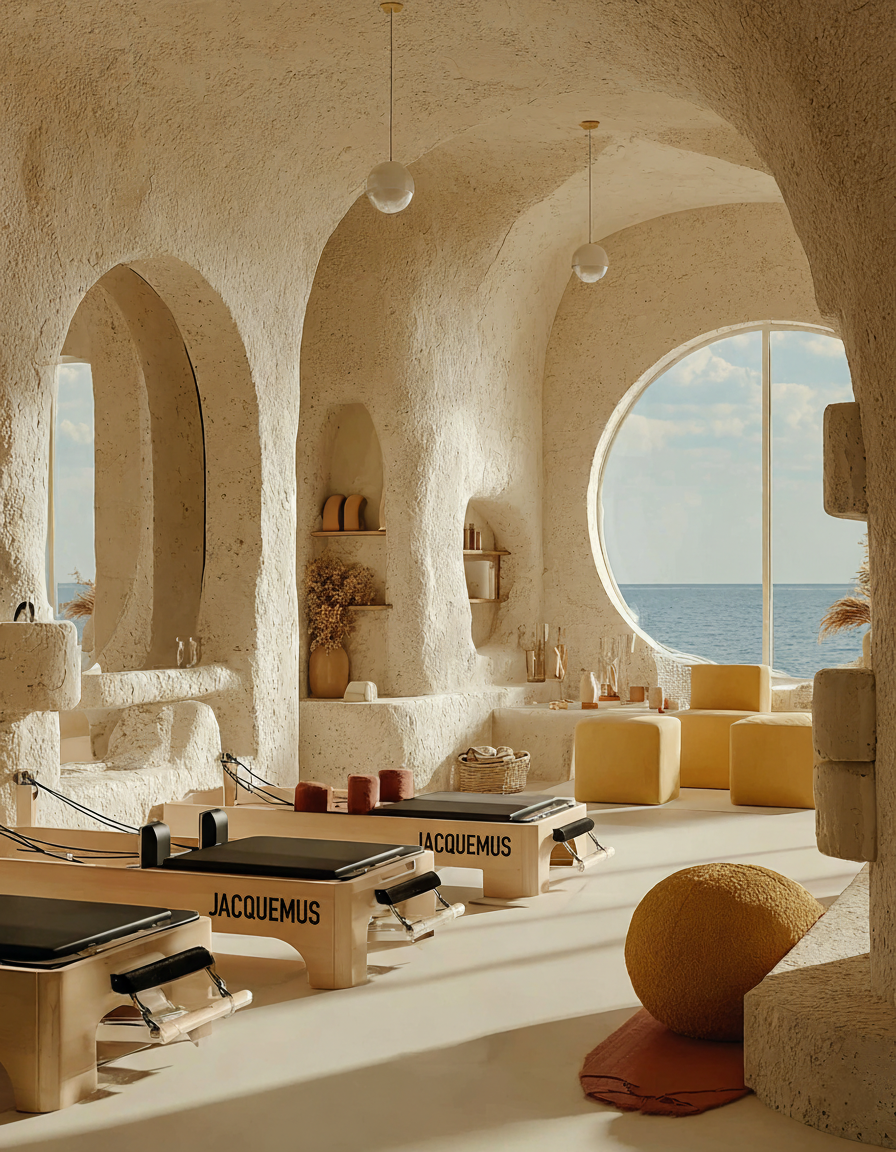

This project is a conceptual study—an imagined space. It is not affiliated with, commissioned by, or connected to Jacquemus. Rather, it asks a simple question: if Jacquemus were to create a Pilates studio in the south of France, what might it feel like? Not as a brand exercise, but as an architectural one—where movement, light, and material become inseparable.
The result is a studio shaped less by fitness culture and more by landscape, slowness, and the domestic calm of the Mediterranean.
Architecture Shaped by Place
The architecture draws directly from the vernacular of the south of France: carved stone, soft arches, thick walls, and deep openings that frame the sea and sky. The building feels embedded rather than placed—cut into rock, sheltered from heat, and oriented toward light.
Arches are repeated throughout, not as ornament but as structure. They create rhythm and continuity between rooms, allowing the studio to unfold gradually. Movement through the space mirrors the Pilates practice itself: controlled, fluid, and deliberate.
Rather than a single open room, the studio is composed of connected chambers—training areas, resting zones, and bathing spaces—each defined by proportion and light rather than doors or partitions.
Material Palette: Quiet and Tactile
Materials are restrained and intentionally imperfect. Lime plaster walls, pale stone floors, and softly glazed tiles reflect light without glare. Surfaces are matte, chalky, and warm to the touch. Nothing feels synthetic or overly refined.
In the reformer rooms, the equipment sits low and grounded, treated almost like furniture rather than machines. The tone-on-tone palette—creams, sand, pale butter, and sun-warmed whites—keeps the focus on the body and its movement through space.
Textiles are used sparingly but meaningfully: upholstered seating, towels, and soft elements introduce comfort without visual clutter. Everything is chosen to calm the nervous system rather than stimulate it.
Light as a Design Element
Natural light defines the studio. Large arched openings and circular windows frame the horizon, allowing the sea to become part of the interior experience. Light moves slowly across floors and walls, marking time throughout the day.
There is no dramatic lighting scheme—only soft, ambient illumination that supports presence and breath. Shadows are welcomed. Corners remain slightly dim. The space never feels overlit or performative.
In this way, the architecture does not compete with the practice; it supports it.
Bathing and Restoration Spaces
The shower and bathing rooms are treated with the same care as the studio itself. Tiled in warm, muted tones, they feel closer to a private bathhouse than a gym facility. Arched thresholds, built-in benches, and recessed niches slow the transition between movement and rest.
These spaces emphasize ritual—arriving, cleansing, pausing—rather than efficiency. They are meant to be lingered in.
A Different Kind of Wellness Space
This imagined Pilates studio rejects the language of high-performance fitness. There are no mirrors, no branding moments, no sense of display. Instead, the space prioritizes grounding, softness, and connection to place.
The influence of Jacquemus is felt not through logos or literal references, but through proportion, color, and restraint—a sensibility that values simplicity, intimacy, and warmth.
Ultimately, the project is about rethinking what a wellness space can be: not something clinical or aspirational, but something human. A place where architecture supports movement quietly, and where the body feels held by its surroundings rather than pushed by them.
This is not a studio designed to be seen—it is one designed to be felt.
