
1/ Reframing the listening space
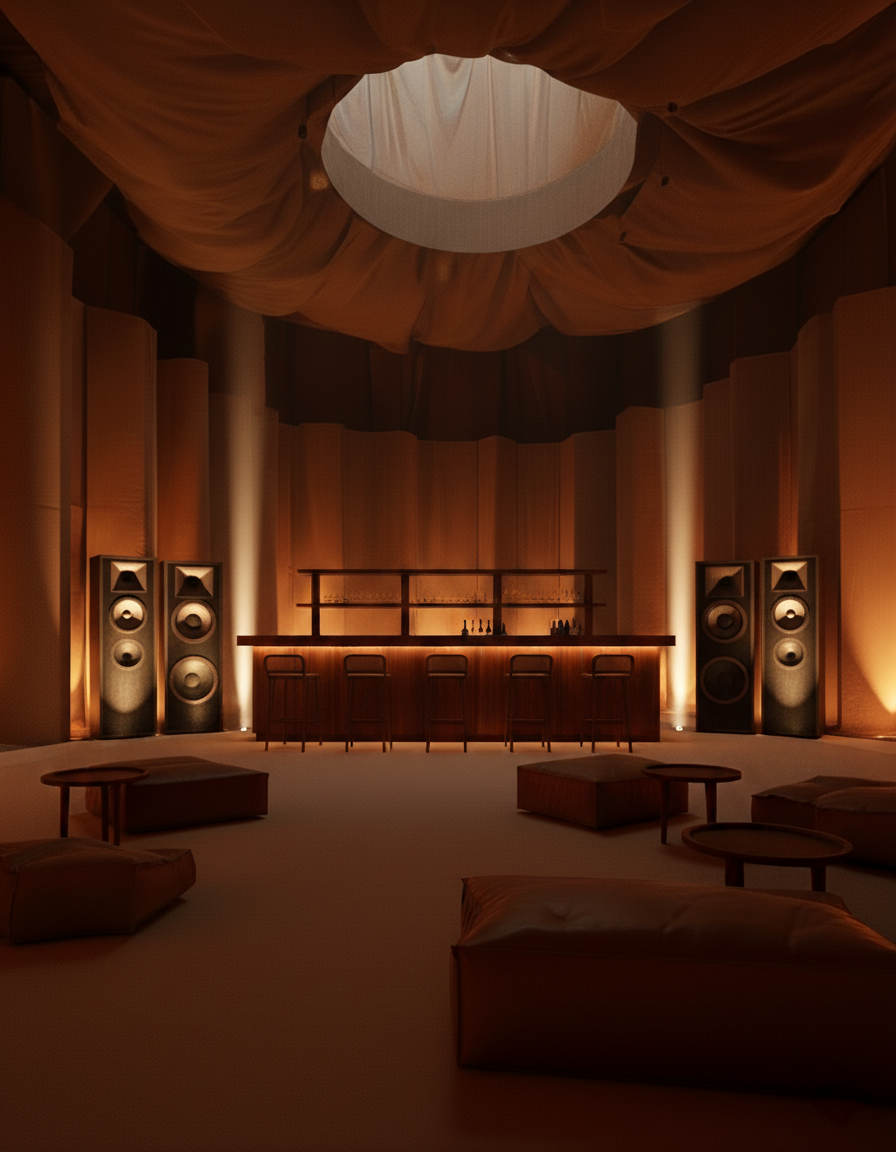
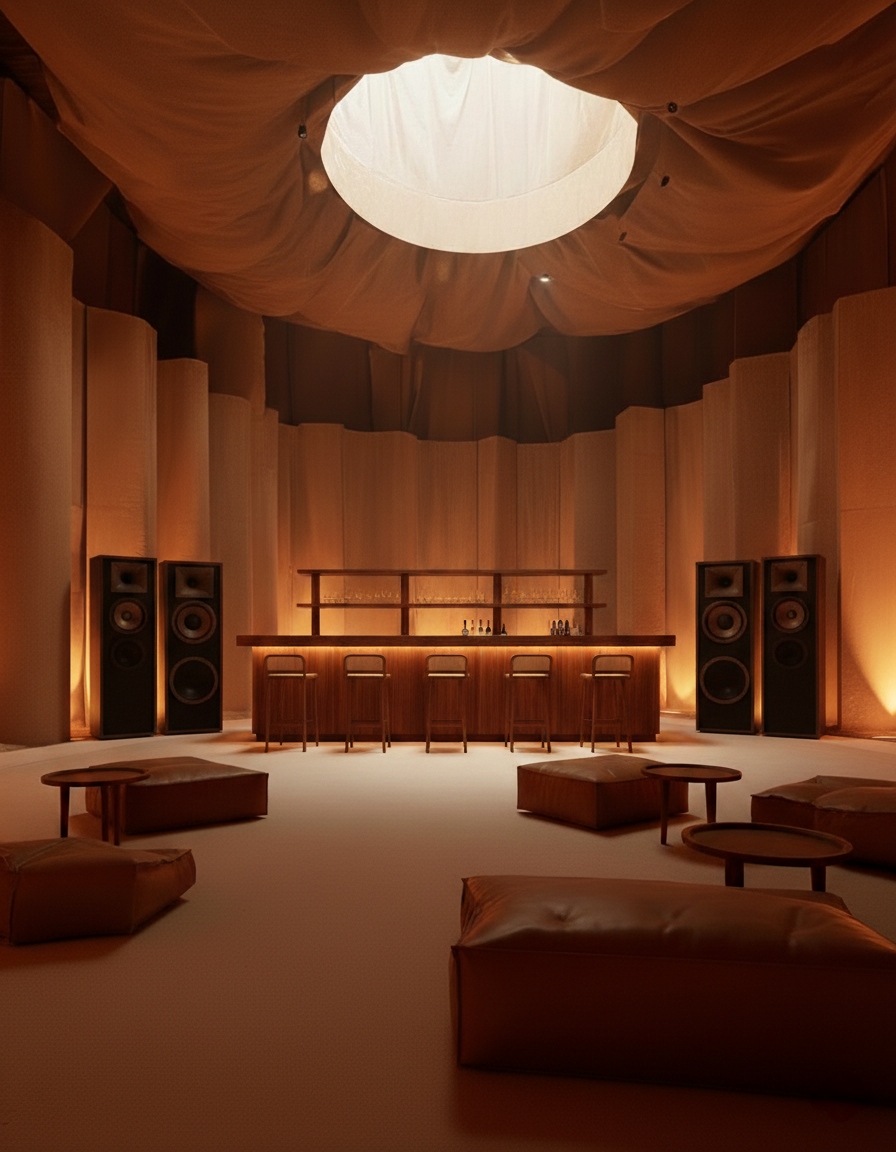
The listening bar began with an unlikely reference point: the monumental set designs often associated with Kanye West. Those environments—defined by vast scale, minimalism, and emotional intensity—treat space as something almost ceremonial. We were drawn to that clarity and focus, but not to the sense of distance or reverence that can sometimes feel intimidating. Our goal was to translate the architectural power of those references into something quieter, warmer, and ultimately more welcoming.
Rather than a stage or a shrine, we imagined the room as a shared interior—one that invites people to sit, listen, and stay.
Architecture as Atmosphere
The architecture is intentionally simple and symmetrical, allowing proportion and material to do the work. The room is wrapped in a continuous envelope, softening its geometry and dissolving hard edges. Walls read less like boundaries and more like surfaces of light and sound, creating a sense of enclosure without heaviness.
At the center, the bar anchors the space. Its placement is deliberate: not elevated, not hidden, but present and accessible. It functions as both a social point and a visual calm, grounding the room while letting the sound system frame the experience.
The ceiling opens into a circular skylight directly above the bar. During the day, it introduces a slow-moving wash of natural light; at night, it becomes a glowing aperture. This vertical connection subtly lifts the room, preventing it from feeling inward or sealed, and reminding visitors of time passing beyond the walls.
Textiles and Acoustic Softness
One of the defining elements of the space is the fabric that surrounds it. Rather than treating soundproofing as a technical afterthought, we made it a visible and tactile layer. The cloth wraps the room continuously, absorbing sound while also shaping how the space feels emotionally.
Its drape and softness counterbalance the architectural minimalism. Light grazes across its folds, creating depth and warmth, and the fabric moves ever so slightly, reinforcing the idea that this is a living space rather than a fixed installation. Acoustically, it allows the sound system to perform with clarity and intimacy; atmospherically, it removes any sense of severity.
The textiles transform what could have been a stark room into something almost domestic—quiet, hushed, and comfortable.
Material Language
The material palette stays restrained: warm woods, muted tones, soft upholstery. The bar itself is crafted in natural timber, detailed but not decorative, designed to age and develop character over time. Seating is low and relaxed, encouraging people to listen with their bodies, not just their ears.
Nothing is overly polished. Surfaces are matte, edges are softened, and finishes are chosen for how they absorb light rather than reflect it. The intent is to reduce visual noise so that sound, conversation, and presence come forward.
A Space Meant to Be Shared
While the inspiration may have come from large, dramatic environments, the outcome is intentionally human-scaled. This is not a room that asks for silence out of reverence, but one that invites stillness through comfort. It’s a place where people can gather without feeling observed, where listening becomes collective rather than performative.
By shifting the language from spectacle to warmth, from monument to interior, the listening bar becomes less about awe and more about connection—between sound and space, between architecture and textiles, and ultimately, between people.
