
6/ A Chambre de Bonne Reimagined: Where Form Meets Function in 13 Square Meters
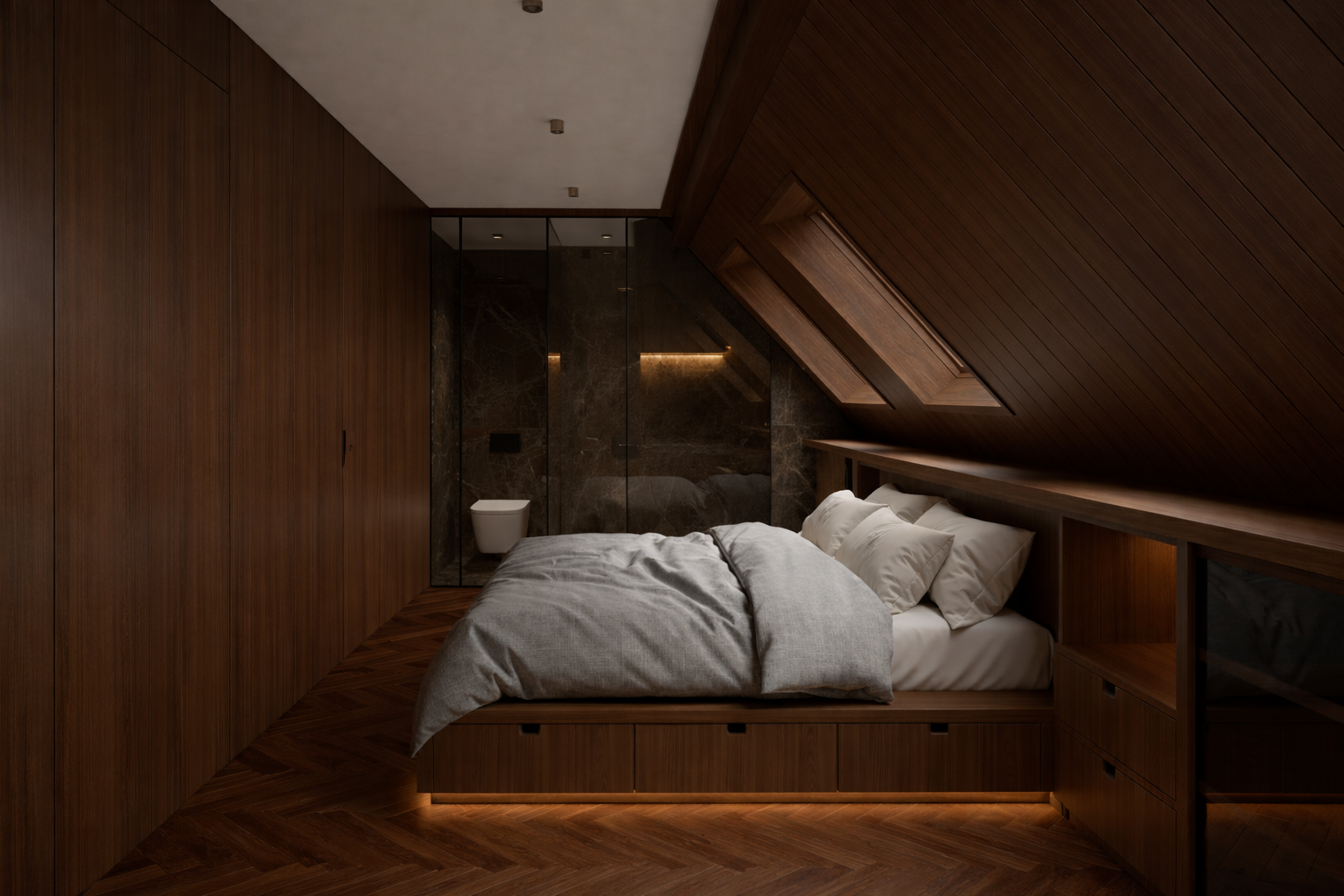
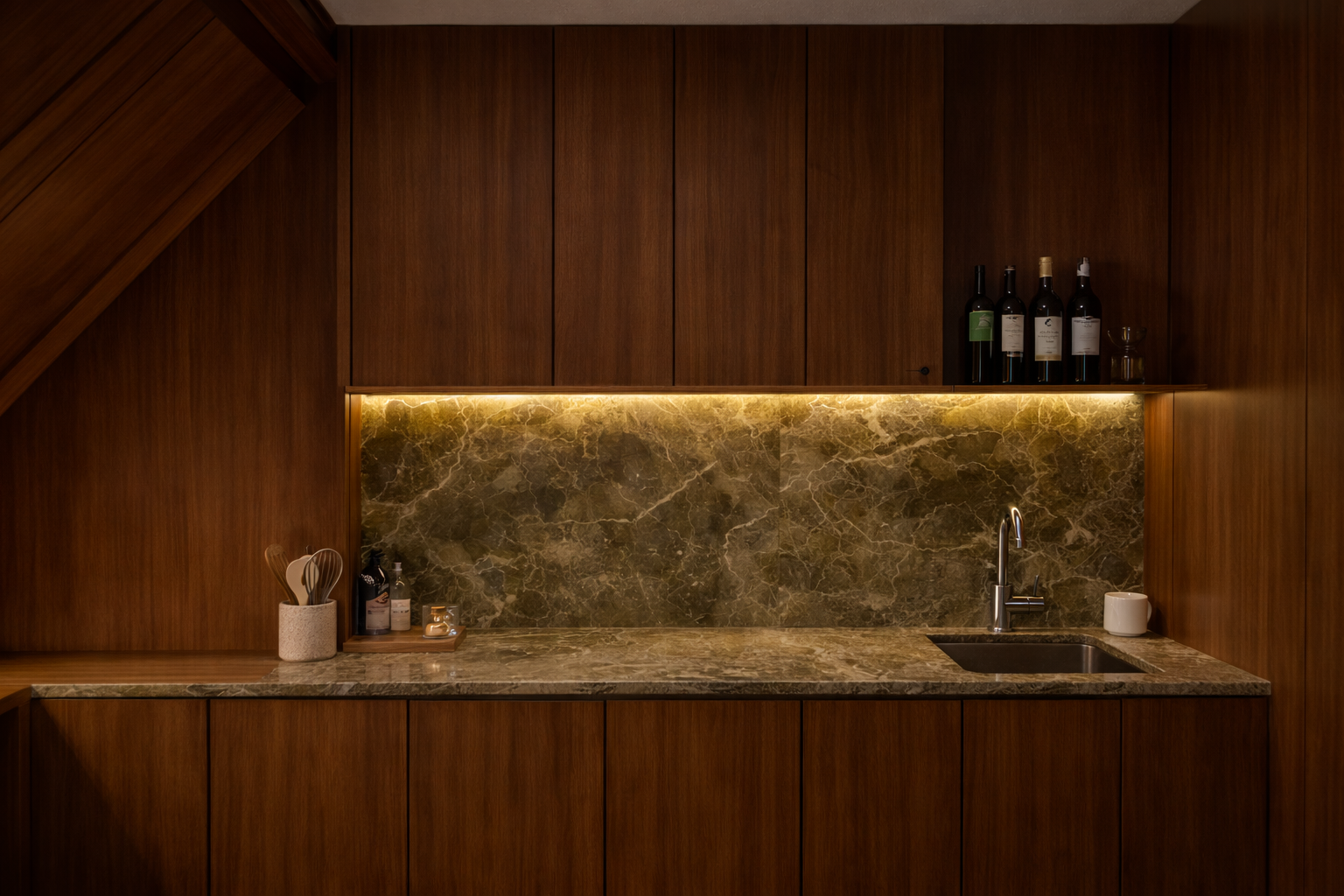
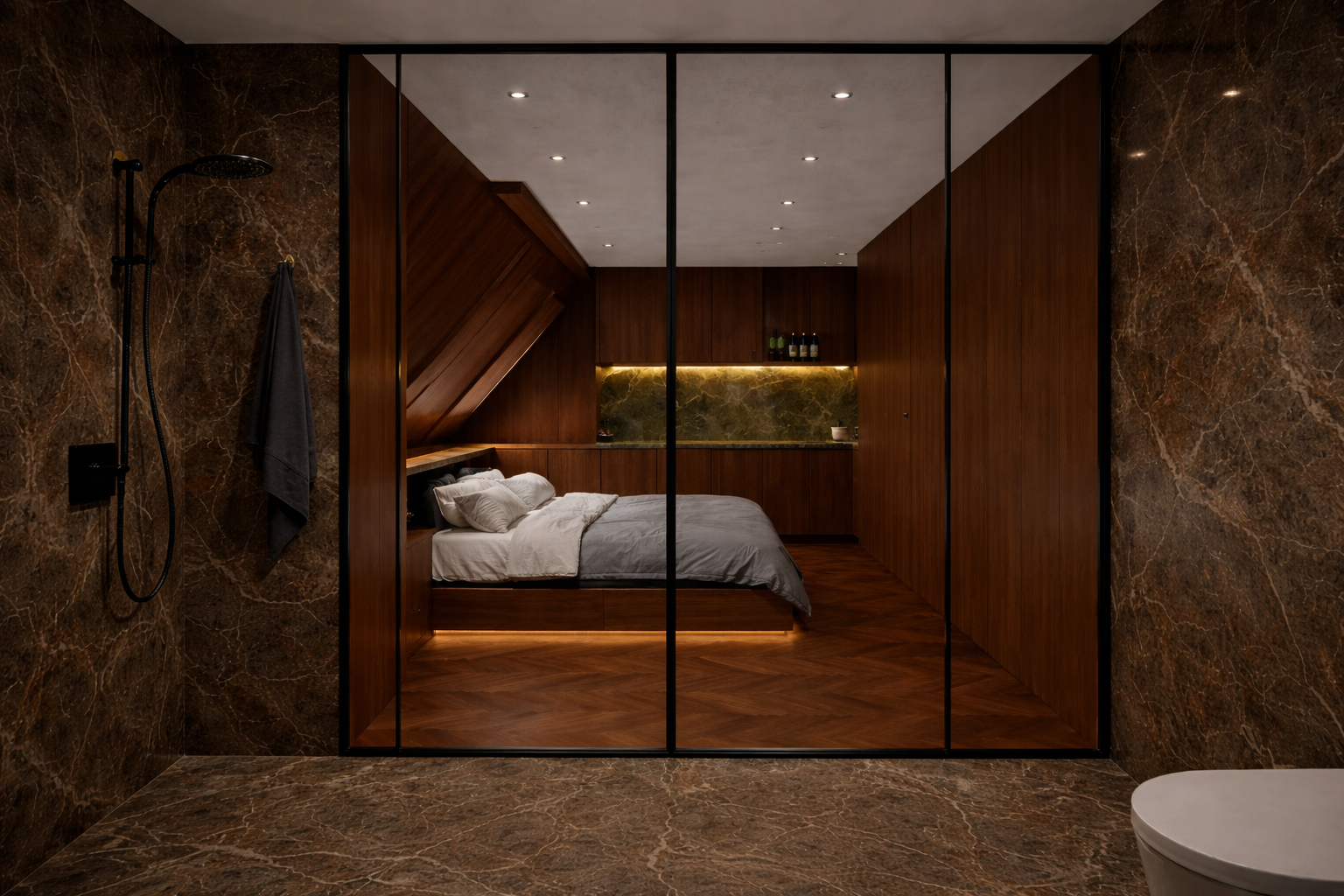
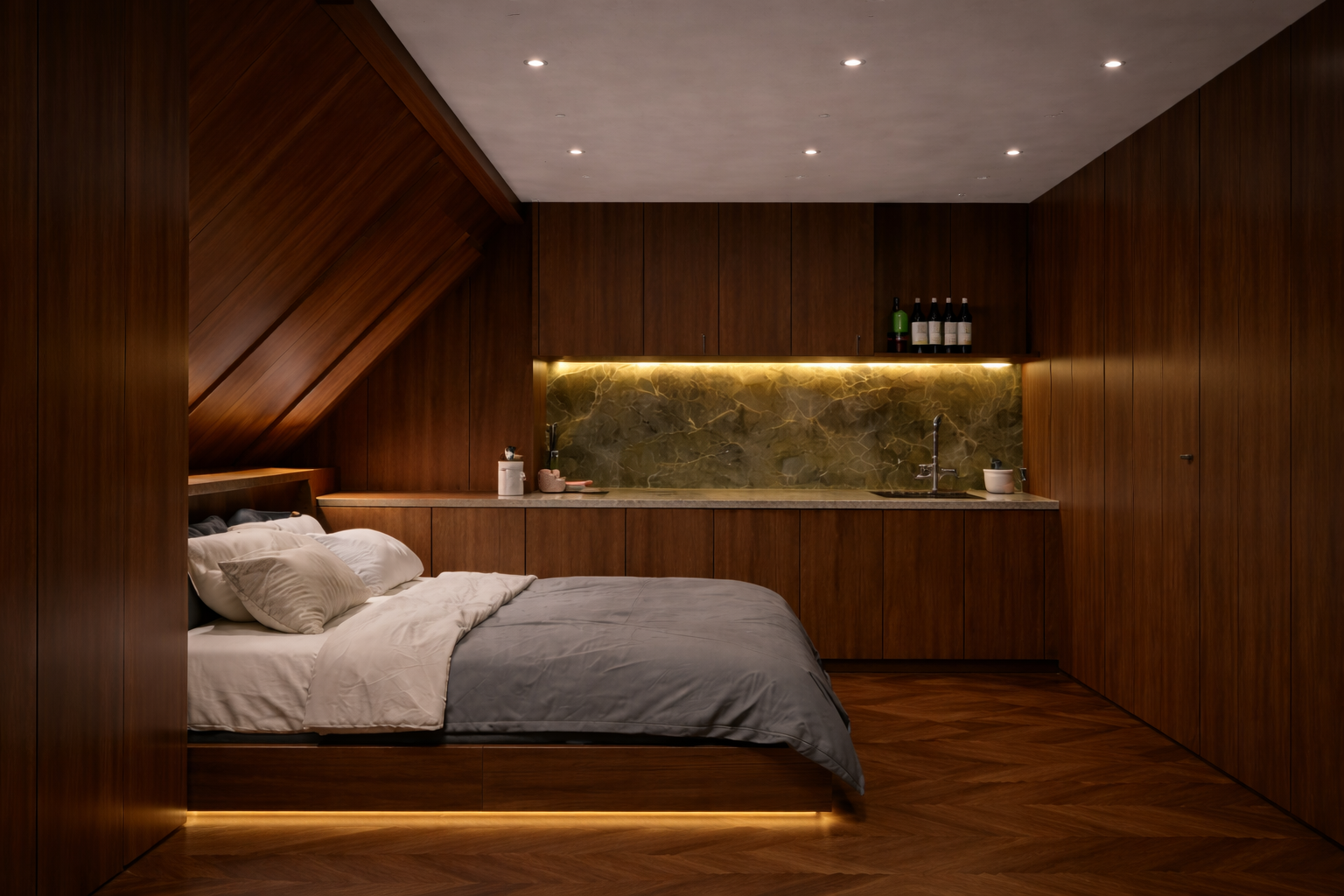
Tucked beneath the roof of a classic Haussmann building in Paris, this 13-square-meter chambre de bonne has been reimagined as a precise, material-driven study in micro-living. Rather than fighting the constraints of the attic geometry, the project embraces them—transforming sloped ceilings, limited floor area, and compact proportions into defining architectural features.
The result is a space that feels deliberate, calm, and surprisingly generous, where every surface works twice and nothing is ornamental without purpose.
Designing with the Roof, Not Against It
The defining characteristic of the apartment is its leaning attic ceiling, punctuated by roof windows that bring daylight deep into the space. Instead of hiding this geometry, the design wraps it in continuous warm timber paneling, allowing the ceiling to flow seamlessly into walls and built-in furniture.
This approach blurs the distinction between architecture and furniture: walls become storage, ceilings become light wells, and circulation paths are carefully carved rather than imposed. The roof windows anchor the room spatially, orienting daily life toward natural light while maintaining intimacy.
A Spatial Spine of Built-In Furniture
The interior is organized around a single, continuous system of custom millwork, running the length of the apartment. This spine integrates:
A compact mini kitchen tucked beneath the sloping roof
A discreet bathroom enclosure with toilet and shower
Storage concealed behind flush timber panels
A bed positioned along the back wall, facing the kitchen and living zone
By consolidating functions into one architectural gesture, the remaining floor area is left open and legible—an essential strategy in a space of this size.
The Bed as Architecture
Rather than treating the bed as a freestanding object, it becomes an architectural element in its own right. Positioned against the back wall and framed by warm wood, the bed anchors the room visually while maintaining clear sightlines toward the kitchen and windows.
Integrated shelving replaces bedside tables, and concealed storage beneath the mattress absorbs what would otherwise require additional furniture. The result is a sleeping zone that feels cocooned but not closed off—a place of rest that remains part of the whole.
Material Restraint, Sensory Richness
The palette is intentionally limited: rich walnut or oak, stone or marble accents in the kitchen, subtle brass details, and soft textiles in muted, earthy tones. This restraint allows material quality and craftsmanship to take precedence over decoration.
Herringbone wood flooring grounds the space in Parisian tradition, while the joinery introduces a quiet contemporary rigor. Lighting is soft and layered—natural daylight by day, warm ambient illumination by night—enhancing the tactile qualities of the materials.
Living Small, Precisely
This project is less about making a small apartment feel “bigger” and more about making it feel complete. Every decision—spatial, material, and functional—is calibrated to the reality of 13 square meters, without compromise or excess.
In doing so, the chambre de bonne is no longer a leftover space beneath the roof, but a fully realized micro-dwelling: efficient, elegant, and deeply attuned to how architecture can support everyday life at its most essential scale.
